← Back to TherapyNow
How people actually recover from addiction — and why everything the system told you is wrong. A free 90-minute masterclass with Elza Berk, Founder of TherapyNow.
Reserve your free spot
Enter your details and we’ll send you the link instantly.
🔒 Your details are safe. We never share your information.
🇿🇦 What you’ll learn
This isn’t a sales pitch. It’s the truth the system never wanted you to know — from someone who lived it, worked inside it, and built something better.
Why willpower has nothing to do with recovery
The real neuroscience of addiction — and why framing it as a moral failing has kept millions of people stuck, ashamed, and unable to ask for help.
The correlation between high empathy and addiction
Why the most feeling, most sensitive people are disproportionately vulnerable to addiction — and what understanding this changes about how we approach recovery.
What Harm Reduction actually means — and why it works
Not abstinence. Not rock bottom. A compassionate, evidence-based approach that meets people where they are and creates real, lasting change. And why South Africa — legally required to embrace it — largely refuses to.
Why trauma-informed care changes everything
Addiction and trauma are inseparable. Trauma-informed care understands this. The mainstream addiction system continues to resist it — and Elza will explain exactly why, and what it costs the people inside it.
Why relapse is not failure
We don’t shame people for a return of depression symptoms. A recurrence of addiction symptoms is no different. You will leave this masterclass understanding why — and never seeing relapse the same way again.
The role of shame — and how to dissolve it
Shame is the single biggest barrier to recovery. It is also the system’s most powerful tool. You’ll learn what actually works instead — and how to begin releasing it.
How to support someone you love without losing yourself
For the family members, partners, and friends who are carrying this too. What helps, what doesn’t, and where to find real support for yourself.
What real recovery looks like — and how to start today
Not a programme. Not a clinic. A way of living that is sustainable, compassionate, and built entirely around who you actually are.
🇿🇦 Who this is for
You’re struggling with addiction
And tired of being told it’s your fault, your weakness, or your choice. It isn’t.
You’ve tried treatment before
And it didn’t work the way they promised. You deserve to understand why — and what else is possible.
You love someone with addiction
And you’re exhausted, scared, and don’t know how to help without making things worse.
You’re in recovery and want ongoing support
Because aftercare is where most programmes abandon you. You don’t have to do this alone.
You work in mental health or social care
And want to understand harm reduction from someone who has lived it and built a career around it.
You’re anywhere in the world
This masterclass is online. You can watch from any country, any timezone, in your own space.
🇿🇦 Your host
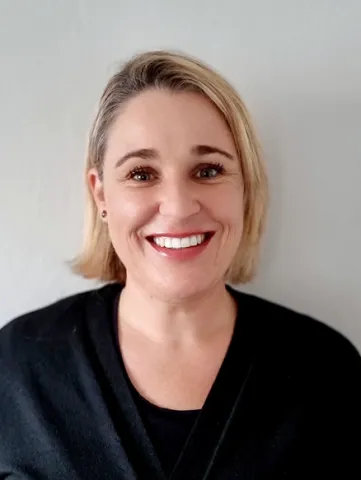
Elza Berk
Founder & CEO, TherapyNow · BA Psychology (2025) · ASCHP WCW/271 · Sober 26+ years
Elza entered the addiction treatment system as a person in treatment. She watched it break people down. She then became part of it — spending over 20 years working inside South Africa’s leading rehabilitation clinics, and eventually recognising, with growing clarity, that she was feeding into the very cycle she had experienced herself.
The system benefits financially from relapse. Readmission is revenue. Shame is the mechanism that keeps people returning. People are told it is their fault when they relapse — when the reality is they were let down by a model designed as a sausage factory, not a healing space. People in. People out. People back in again. South Africa is legally required to embrace Harm Reduction. The majority of treatment centres ignore this — because Harm Reduction, if properly implemented, would dismantle their business model.
Elza began working online and in inpatient settings using trauma-informed care — an approach the mainstream addiction system continues to resist. She founded TherapyNow in 2016 to build something the system refused to. She is sober 26+ years — and she is deeply aware that abstinence is not the goal for everyone, and never has been the only measure of recovery.
“This masterclass is what the system never wanted anyone to know.”
🇿🇦 The TherapyNow difference
10,000+
Individuals, couples and professionals reached through counselling, training and harm reduction education
51,000+
Social media followers — a growing community of people committed to real conversations about mental health
26+
Years of lived and clinical experience behind every session, every word, and every session of this masterclass
5
Continents reached — Africa, Europe, North America, Australia and Asia
🇿🇦 The evidence is global
This is not theory. This is documented, peer-reviewed, internationally recognised evidence. The countries that chose compassion over punishment — chose people over ideology — changed outcomes permanently.
Portugal
Decriminalised all drugs · 2001
80%
reduction in drug-related deaths over 20 years
90%
drop in drug-related HIV infections
45x
less likely to die of overdose than someone in the US
Portugal was the heroin capital of Europe in 1999. Instead of harsher penalties, they decriminalised personal drug use and invested in health-based support. The system defined addiction as an illness, not a crime. The results were transformative — and held for over two decades, until funding cuts partially reversed them. The lesson: Harm Reduction works. Defunding it doesn’t.
Switzerland
Four-pillar drug policy · from 1991
82%
reduction in new heroin users after heroin-assisted treatment began
98%
drop in home thefts after heroin-assisted treatment
50%
decrease in overdose deaths between 1991 and 2010
Switzerland faced an escalating heroin crisis and tried punitive enforcement first. It failed. They then built a four-pillar model combining harm reduction, prevention, treatment and law enforcement — including the controversial but evidence-backed medical prescription of heroin to chronic, treatment-resistant users. The results were so compelling that Germany, the Netherlands and Canada replicated the model.
Canada
Supervised consumption · from 2003
5.5%
decrease in public injection and syringe sharing after overdose prevention sites opened
$4.8B
spent annually on drug policing — while the overdose crisis continued unabated
Canada’s Insite in Vancouver was North America’s first sanctioned supervised consumption site. Peer-reviewed research found it saved lives, reduced HIV transmission, and decreased public drug use — without increasing crime in surrounding areas. Canada’s experience also exposed the staggering cost of policing-first drug policy, spending nearly five billion dollars annually on enforcement while overdose deaths rose.
United States
Punitive model · the cautionary tale
500%
increase in drug deaths over the same period Portugal cut theirs by 80%
100,000+
overdose deaths per year — and rising
While Portugal was cutting overdose deaths by 80%, the US — doubling down on the war on drugs — saw drug deaths explode by over 500%. Researchers predict the overdose crisis will kill a total of 2.2 million Americans by the end of this decade. The US spent decades and billions on criminalisation. It did not work. It never worked. What is happening in America is not a drug crisis. It is a policy crisis.
The Global Relapse Economy
How the addiction treatment industry profits from people not getting better
$9.44B
global addiction treatment market value in 2024 — projected to reach $16.2B by 2034
85%
of people relapse within the first year of leaving inpatient treatment
$27,000
maximum cost of a single 30-day inpatient stay — per person, per admission
+21%
increase in for-profit treatment centres between 2004 and 2016, as nonprofit providers declined
The global addiction treatment industry is worth nearly ten billion dollars annually — and it grows every year, not because people are getting better, but because they keep coming back. When 85% of people relapse within the first year of inpatient treatment, each relapse represents a new admission. A new invoice. A new revenue event.
A standard 30-day inpatient stay costs between $14,000 and $27,000. Private equity groups have identified addiction treatment as a recession-proof investment — demand rises in economic downturns, insurance covers costs, and the revolving door of relapse, readmission and repeat keeps beds full. As CBS News reported in 2023, when private equity enters addiction treatment, the focus shifts from programme design to profit margins.
A peer-reviewed study published in PubMed found that patient brokers in some US for-profit facilities encouraged clients to use drugs before re-entering treatment — to meet insurance eligibility criteria. The same study linked these practices to increased overdose deaths. This is not an isolated scandal. This is what a system looks like when it is optimised for readmission rather than recovery.
Harm Reduction is a direct threat to this business model. If people recover without relapsing, the revolving door stops spinning. This is why the system resists it. This is why the shame narrative exists. Shame brings people back. Compassion sets them free.
Research & investigative sources
Precedence Research · Global Addiction Treatment Market Size 2024–2034 Grand View Research · Substance Abuse Treatment Market Report · NIDA relapse rate data CBS News · Some addiction treatment centres turn big profits by scaling back care (2023) PubMed / PMC · Patient brokering in for-profit substance use disorder treatment (peer-reviewed) American Addiction Centers · Trends in US Addiction Treatment · SAMHSA data Drug Rehab Agency · Why Rehabs Are Recession-Proof Investments Gambit Recovery · The Revolving Door of Rehab: Relapse is Revenue (2025)South Africa
Legally required to embrace Harm Reduction · largely failing to
108
countries include Harm Reduction in national policy — South Africa is legally one of them
Majority
of SA treatment centres remain abstinence-only — in direct conflict with the evidence
South Africa is constitutionally and legally obligated to embrace Harm Reduction. The evidence from Portugal, Switzerland, Canada and beyond is unambiguous. Yet the majority of South African treatment centres continue to operate on an abstinence-only model — because Harm Reduction, properly implemented, would cost them their financial model. This is not a clinical decision. It is an economic one. It is also, Elza argues, a human rights violation.
🇿🇦 The global picture
108 countries now include Harm Reduction in national policies — yet criminalisation and punitive responses remain dominant in most places, undermining the evidence at every turn. In March 2024, the Commission on Narcotic Drugs reached a historic milestone, for the first time explicitly recognising the role of Harm Reduction in international drug policy resolution. The world is moving. South Africa must move with it.
Harm Reduction International · Full global research →Ready to hear what the system
never wanted you to know?
Free. 90 minutes. A movement.
🔒 We never share your information. Unsubscribe anytime.